
Pannus - A Progressive Inflammatory Disease of the Cornea
Pannus
Kelly Sigle, DVM, DACVO
Pannus, or chronic superficial keratitis, is a progressive inflammatory disease of the cornea. The disease is most common in German Shepherds, Greyhounds, and the Belgian Malinois. It is thought that ultraviolet light causes a change in the structure of the cornea that causes the dog's immune system to see the cornea as ‘foreign,’ thus inciting an immune-mediated attack on the cornea.
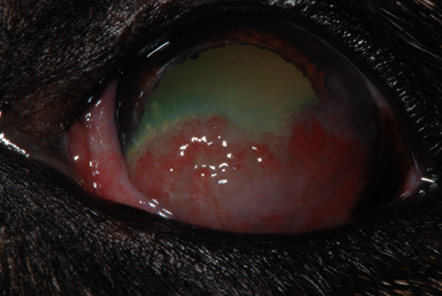
Common clinical signs include corneal and conjunctival pigmentation (brown discoloration), corneal vascularization (blood vessel in-growth) and opacification (haziness) of the cornea. These corneal changes may lead to permanent scarring, and may progress to severe visual impairment or blindness in severe cases. Active disease may result in discomfort.
The cardinal sign of Pannus is vascular or pigment infiltration into the clear cornea, causing whitish, pink, or brown discoloration. Despite intensive research efforts, no permanent cure exists. However, in the vast majority of cases, the disease progress can be halted, and the condition can be managed long-term, especially if therapy is instituted early in the course of the disease. The inflammatory cell infiltrate and the vascular invasion are usually reversible with therapy, whereas scarring and pigment deposition are less reversible once they have occurred.
The goals of therapy are to reverse active vascularization, and to prevent further progression of the scarring and pigment deposition in the cornea. There are three main therapeutic options:
1. Corticosteroid therapy may be administered via intermittent injections under the conjunctiva (pink mucous membrane of the eye) and by continuous application of eye drops or ointments. This is the main line of defense against progression of the disease. Therapy is usually successful, but must be continued lifelong. Even short periods of interrupted therapy may cause severe recurrence with devastating effects on the dog’s vision.
2. Topical immunomodulatory therapy in the form of cyclosporine or tacrolimus ointment or drops may improve the condition. These medications can be used in combination with corticosteroids to reduce the frequency of corticosteroid administration necessary to maintain control.
3. Surgical excision of a superficial layer from the affected area may restore vision in eyes with extensive scarring and pigmentation. This is called a superficial keratectomy. Unfortunately, the post-operative recurrence rate is high, and this method remains a last resort.
New research suggests that the placement of a subconjunctival cyclosporine implant(s) may control disease in some dogs via 24/7 release of Cyclosporine medication, or may allow corticosteroids and/or topical Tacrolimus to work more effectively when administered.
The key points in effectively treating Pannus are to (1) diagnose the disease early; (2) initiate topical therapy at an appropriate frequency and medicate at this frequency until the disease is in remission; (3) slowly and methodically cut back on the frequency of the topical therapy until we find the lowest frequency of medications for your individual pet that will keep the disease in check; (4) limit extensive UV light exposure. Doggie "sunglasses" may be beneficial to help limit UV light exposure. Please see www.rexspecs.com and www.doggles.com to view options for sunglasses for dogs.