
Can A Blind Horse Be Happy?
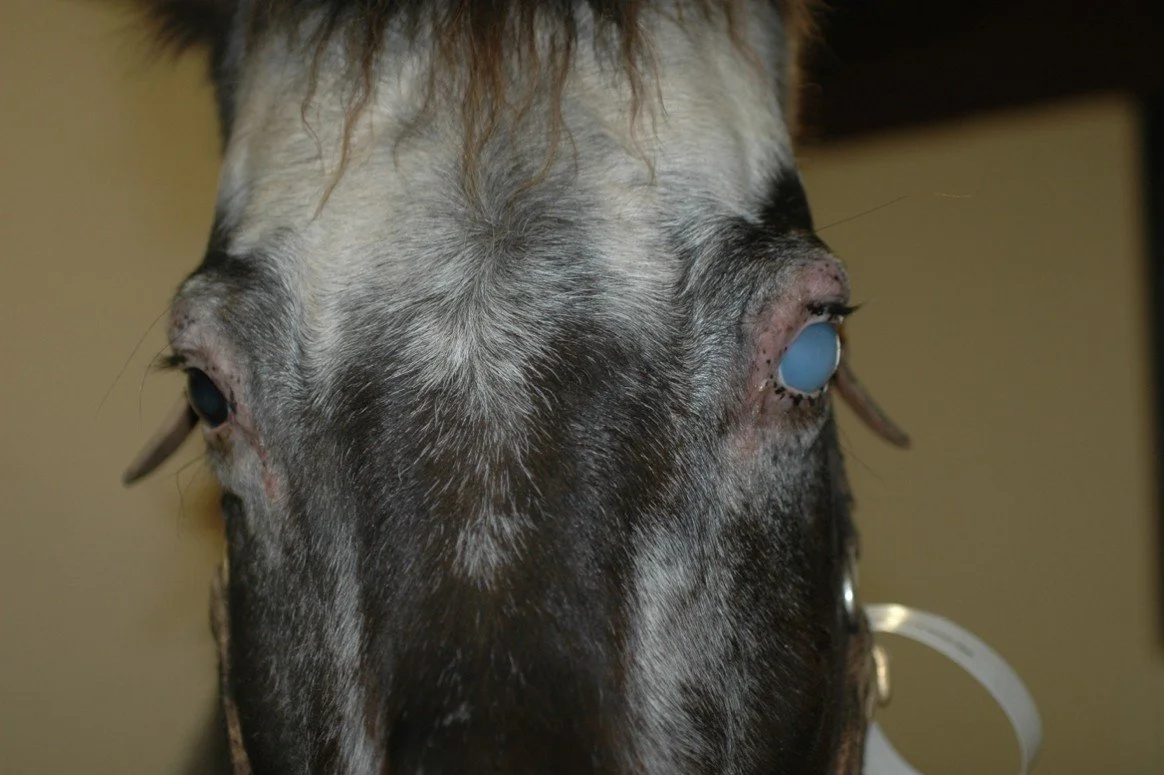
Horses can become blind for many reasons. The most common reason for blindness in horses is Equine Recurrent Uveitis (ERU), with or without secondary glaucoma. The incidence of ERU is 2-25% and the likelihood of blindness with ERU is more likely in Appaloosas. The positive side of ERU is that blindness generally happens gradually which can be easier for horses to adjust to in comparison to sudden blindness that can occur following a trauma. In either scenario, there is a transition period for a horse that has become blind. This transition period can last weeks to months and can include reluctance to walk, spooking, and anxious behavior. A safe environment for a blind horse includes a flat paddock with ideally no obstacles within and safe fencing. Sheds can be designated with a special footing surrounding (gravel/mulch) so that the horse can navigate safely. A safe companion (horse, donkey, sheep, goat) is important so that the blind horse can safely access food and shelter. In a safe and predictable environment many blind horses can have an excellent quality of life, however, owners should be aware of the possibility of injury. Since horses are flight animals, they are quick to startle and that combined with blindness can put them at a higher risk of injury to themselves or others. If owners do not want to take on the risk of a blind horse or they feel like they cannot create a safe environment, euthanasia is a reasonable choice. With a proper set up a blind horse can live a long and happy life.