Equine Recurrent Uveitis
Equine Recurrent Uveitis
Brittany Martabano, DVM, MS, DACVO
Equine recurrent uveitis, also called ERU or ‘moon blindness,’ is a common ocular disease in the equine population. While there is much debate as to the underlying causes of ERU, genetics certainly play a role in many affected breeds of horses, and some systemic or infectious diseases can, as well.
ERU can be a challenging disease to treat. However, if caught early, there are multiple options for the treatment of ERU, and we can prolong vision and comfort for an affected horse for many additional years.
It is important to recognize signs of ERU early. When having an acute (sudden) flare of disease, many horses exhibit serous (runny) or clear discharge from the eye with some degree of clouding of the surface of the eye, redness of the white of the eye, swelling of the eyelids, and/or squinting. These eyes are often stain negative (have no corneal ulcers). These episodes are also often mistaken for allergies. Obtaining accurate intraocular eye pressures can be helpful, and frequently reveal low pressure in the affected eye, which is consistent with inflammation inside the eye that should not be seen with allergic conjunctivitis or allergies.
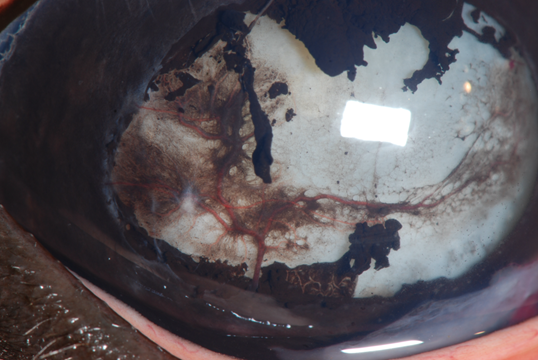
More chronic signs of ERU include darkening of the iris, atrophy (shrinking) or degeneration of the corpora nigra, clouding of the cornea, or cataract formation inside of the pupil. This typically reflects a case that has had low-grade, smoldering inflammation over time (common in the Appaloosa), or a horse that has had multiple uveitis flares over time and has accumulated damage.
Treatment is aimed at managing inflammation and its consequences. Topical anti-inflammatories such as neopolydex and diclofenac are the mainstays of treatment. If a horse is on neopolydex chronically, the horse owner should be informed of the risk of infected corneal ulcerations if signs of squinting develop and are not caught early. Surgical treatment options include low-dose intravitreal gentamicin injection and suprachoroidal cyclosporine implants. If your horse has been diagnosed with ERU, or you believe that your horse may suffer from ERU, please contact a veterinary ophthalmologist to inquire further about these procedure options.