Glaucoma in Dogs
What is glaucoma?
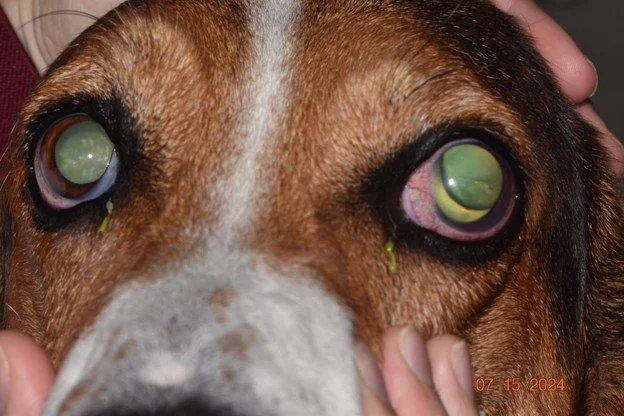
Glaucoma occurs when pressure inside the eye becomes too high, usually because fluid cannot drain out normally. This pressure can damage the optic nerve and retina, causing pain and permanent loss of vision.
The eye produces intraocular fluid, called aqueous humor, to provide nutrition to the internal structures that do not have a direct blood supply; these include the cornea (clear external ‘windshield’ or ‘dome’ of the eye) and the lens (structure behind the pupil that helps focus light on the retina; this is the part of the eye that becomes cloudy when a cataract develops). Fluid is constantly being produced so that it can deliver nutrients to the cornea and lens. As it is used, old fluid drains out of the eye while new fluid is produced. There is a drain called the iridocorneal angle located in the front chamber of the eye. This drain has a series of holes through which old fluid is drained out. In dogs, glaucoma develops when the drain is either abnormally shaped (i.e., primary glaucoma, where a genetic mutation causes the formation of too few holes for fluid to escape), or it becomes clogged (i.e., secondary glaucoma, where abnormalities such as inflammation, blood in the eye, or intraocular tumors cause clogging of the drain).
It is important to diagnose and understand the underlying cause of glaucoma, because treatment recommendations will vary depending on these specific details.
How is it diagnosed?
A veterinarian measures the pressure inside the eye using a test called tonometry and examines the eye for other changes associated with glaucoma. These physical changes to the eye can include pain (squinting or rubbing at the affected eye), redness, cloudiness, and a dilated pupil.
How is it treated?
Treatment aims to lower eye pressure quickly, preserve vision where possible, and keep your dog comfortable. Treatment may include medications such as eye drops, surgery, or a combination of these approaches. It is important to understand that there is not one widely accepted treatment approach to manage the various types of glaucoma in dogs, so your veterinary ophthalmologist will design a plan that ensures the best outcome for your dog’s specific circumstances.
When might the eye need to be removed?
If glaucoma has progressed to the point that the eye is permanently blind and painful due to uncontrolled eye pressure, particularly when the eye has become enlarged, surgical removal of the eye (enucleation) may be recommended to relieve the pain.
Although the thought of eye removal can understandably be upsetting for owners, in this situation the purpose of surgery is to restore comfort and ensure a good quality of life for your dog. Some veterinary ophthalmologists may have cosmetic alternatives to eye removal surgery that can be offered, but the appropriateness of these options varies based on each dog.